Color by Dulcia MacPherson, captions by me.
I recently presented my stola paper at An Tir’s Kingdom Arts and Sciences Championship as a single entry. You can see a video of my presentation here (20 min talk, 20 min Q&A). Since I know not everyone wants to read a giant tome, I’m going to break up important bits of my paper into a series of blog posts.
The stola had four major identifying features:
- Worn as an overdress
- Made of lightweight wool
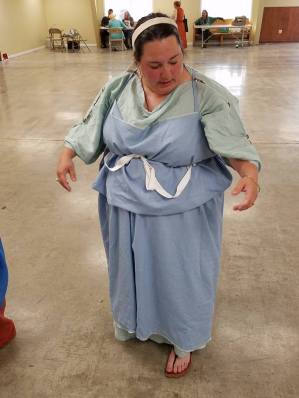
- Constructed as a simple tube, with straps, round pins, or fabric knots at the shoulders, that created a “V neck” with draping.
- Worn double belted, to create an extra folded layer at the hips
The stola was popular for about 400 years (mid-Republic to early Empire), and was integral to the Roman matron’s sense of self. It gave its wearer special social and legal protections.
Note: Click here for PART I: Why Wool?, PART II: Color & Embellishment, PART IV: Timing.
PART III: How do you make this darn thing, anyway?
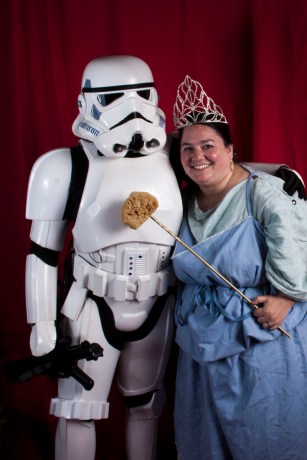
I tried to find some Hollywood Roman stolae to make fun of, but nobody was wearing them at all! Even Spartacus, which takes place during the middle Republic and should be *lousy* with stolae… not a one. The costume designers made the same mistake many recreators do. They hit the eBay sari sales *hard* and then they put too much work into it. These garments are constructed, and trimmed… too many seams, too busy, not enough draping! Is…. that a CAPE coming off her left shoulder?! *boggle* 
Put your scissors and sewing machine down. This is shockingly easy. Continue reading


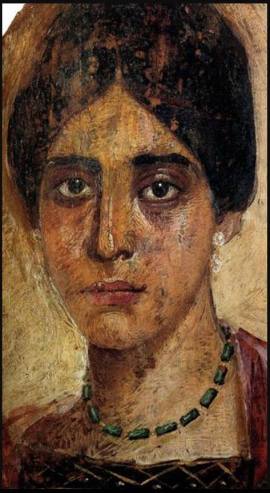

 My two pre-written entries were on Roman jewelry and the Roman stola (papers will be posted within a week – I like to incorporate what I learn from the judging process). With the first one, I was focussing on “assembly” type pieces, that I could make in my living room without a studio or fancy equipment, but would still duplicate the aesthetic of Rome from 100 BCE-300 CE. On the left is a largesse box – basically a kit to help others get into basic jewelry making and create period ornaments. One was donated to Dragon’s Mist. Four more will be delivered to Queen Stjarna this weekend.